
Ritu
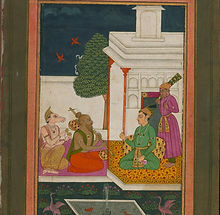
The Seasons and Ragas.
Indian culture recognizes six seasons: Grīṣma (summer), Varṣā (rainy season), Ṥarada (autumn), Hemanta (wet season), Ṥisira or Ṥita (winter), and Vasanta (spring). These align with specific months of the year as follows:
1. Vaiśākha and Jaiṣṭha (mid-April to mid-June) – Summer
2. Āṣāḍha and Srāvaṇa (mid-June to mid-August) – Rainy season, monsoon
3. Bhādra and Āsvina (mid-August to mid-October) – Autumn
4. Kārtika and Agrahāyana (mid-October to mid-December) – Wet season
5. Pauṣa and Māgha (mid-December to mid-February) – Winter
6. Phālguna and Caitra (mid-February to mid-April) – Spring
Certain Ragas exhibit a distinct seasonal character. For example:
- Summer: Rāga Dīpaka
- Rainy Season: Rāga Megha
- Autumn: Rāga Bhairava
- Wet Season: Rāga Mālakauśa
- Winter: Rāga Śrī
- Spring: Rāga Hindola
These Ragas possess the unique feature that, during their respective seasons, they can be performed at any time. For instance, Rāga Mālakauśa, traditionally a midnight Rāga, can be played at various times during the wet season.
INDIAN CLASSICAL MUSIC LESSONS AND ONLINE COURSES
IN MODAL MUSIC, IMPROVISATION AND COMPOSITION
LEARN THE MAIN TECHNIQUES OF INDIAN MUSIC WITH A SIMPLE AND PERSONALIZED METHOD!
My online music lessons are the perfect way to learn to sing, or improve the vocal techniques already acquired, or to start playing your favorite instrument or progress in your musical path through an alternative teaching method to Western teaching.


The goal of my Indian classical music courses is to teach you the basics of this wonderful art form. You will learn about the various Ragas, or modal scales, the Talas or rhythmic cycles, and the vocal and instrumental techniques used for improvisation in Indian classical music.
What makes my approach to teaching indian classical music so distinctive?
My teaching system is obviously unique and different from others and I think that learning music following the traditional Indian approach is the most effective method regardless of genre: pop, jazz, world fusion, electronic, whatever musical style you if you are interested, I guarantee that thanks to the Indian perspective, you will have an edge over all the other musicians.
What will you learn?
During my lessons I use a variety of techniques and exercises to learn to improvise and compose. What you will learn in my Indian classical music courses will be based on the concepts of modal scale and rhythmic cycle, i.e. Raga and Tala. You will also learn vocal and instrumental techniques which, although based on Indian musical theory, also find application in the Western musical system.
Will the course suit you?
My courses are aimed to all musicians of all levels, beginners, intermediate and advanced, offering different study materials and techniques from the usual Western standards. All those who want to learn to play Indian classical music are welcome and no previous knowledge or experience is necessary to get started.
I can not wait to get to know you!
Contact me now! The first lesson is FREE!


%2018th-19th%20centuries%20b.jpg)


